Kelli Trenga: Meeting Kids Where They Are
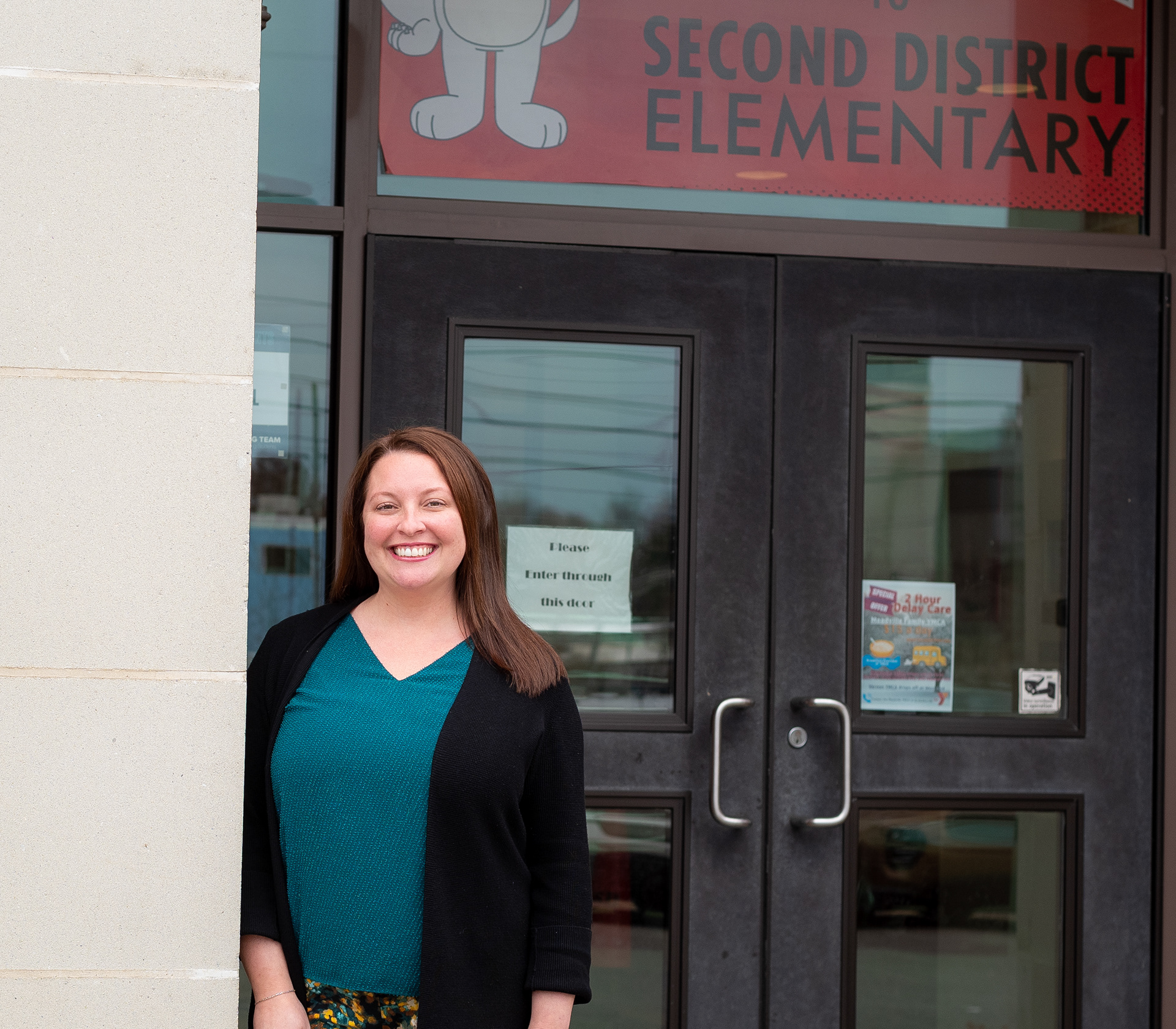
We can miss a lot when we underestimate people. Kelli Trenga, principal of Meadville’s Second District Elementary School, daughter of two big Meadville families (the Kightlingers and Hylands), is incredibly kind and cheerful. “People have a misconception of me as just nice and sweet,” she tells me. The positivity is no facade. It runs deep, bolstered by her faith and her love of family. But right alongside the sunshine is a busy, fast-moving mind, enormous empathy for children, and a steely directness with people when that’s what’s needed. “You’re tough,” I tell her. “I’m firm,” she says, smiling.
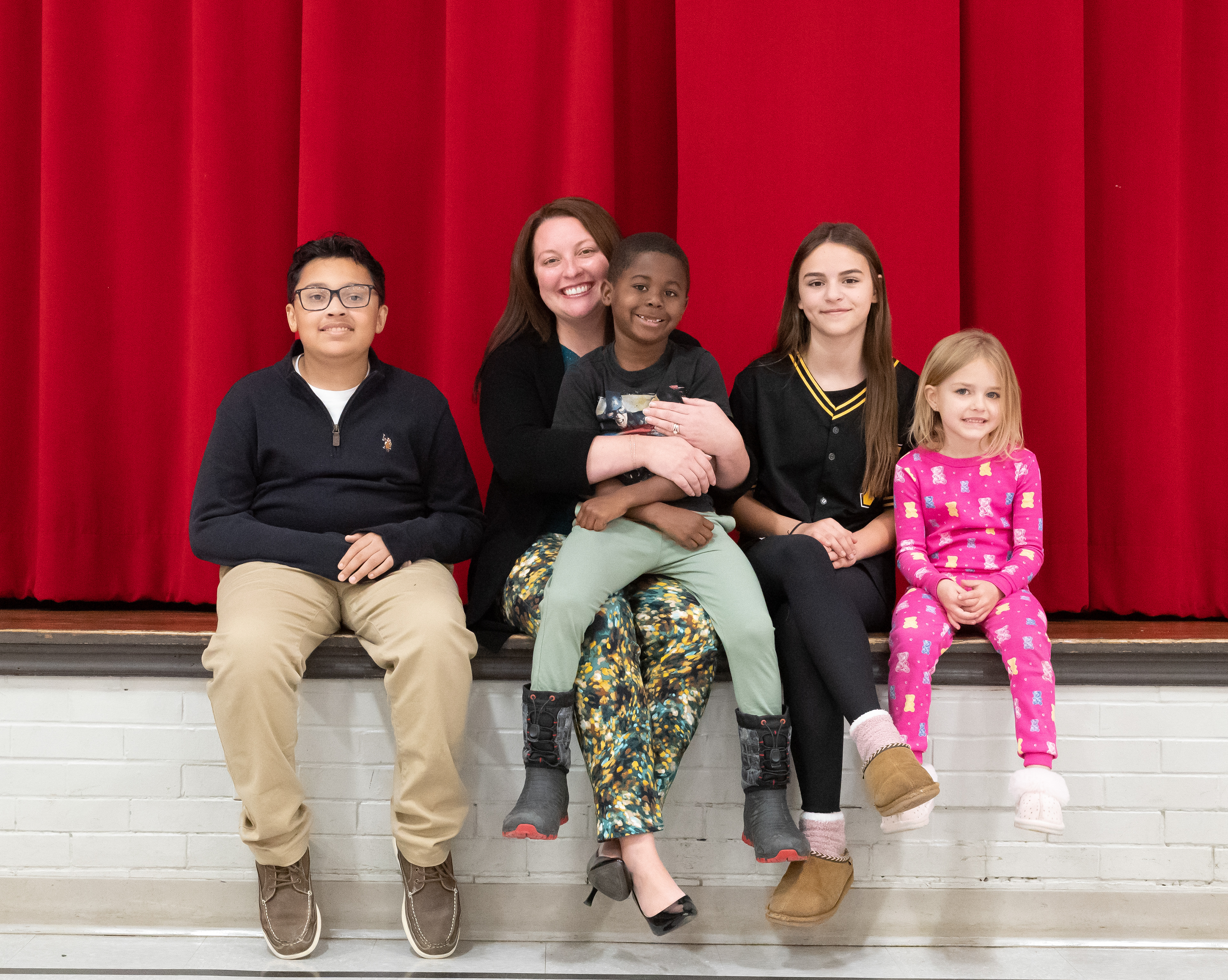
When Kelli was six years old and attending afternoon kindergarten at East End elementary, her mother would often take her in the morning to Second District, where her beloved grandfather, Jack Hyland, taught gym. She remembers sitting with her feet dangling off the stage while he showed off his students to her. “Show my granddaughter how you can dribble a basketball all the way down the court!” Decades later she has not forgotten how he connected to those kids. “They loved him,” she tells me, “and he loved them.”
It was her first glimpse of what teaching and learning could feel like, and it’s where the story of her own interest in education begins. Now, as if by fate, after teaching elementary and special ed in the area for 18 years, and earning along the way a masters in Curriculum and Instruction, a doctorate in Educational Leadership, and a principal’s certificate, Dr. Trenga is back at Second District, starting her fourth year as its principal. And love is still in the middle of things.
It’s tempting to say that Kelli has worked a kind of magic at the school, though she would never say that. “It’s a team effort,” she says. “We’re all in this together, the teachers, the staff, the kids, parents, and community.” But she has brought to the school a philosophy, a set of practices, and a spirit that has made Second District a happier and more enterprising place.
Historically, the school has faced the kinds of obstacles to learning many schools confront, especially those located, like Second District, in lower-income attendance areas—things like absenteeism and misbehavior, and the conditions that often underlie them, such as hunger and trauma. Teacher and staff morale have wavered at times. Before Kelli arrived there had been three principals in less than three years and nothing like a master calendar to lend order to how the school day unfolded.
Kelli’s first weeks on the job were not easy, either. Her predecessor, an interim principal, had left six weeks before the end of the school year, which meant Kelli landed without transition into this big new job at the end of other people’s school year. “On day one I was opening doors to see if they were closets or classrooms.” A former superintendent of hers told her, “just make it to summer.”
In the fall, when the new school year began, she faced another kind of challenge. She was determined to make Second District a more nurturing and supportive environment. This meant instituting what gets called in her field “restorative practices,” including an approach to misbehavior that shifts the emphasis away from punishment to address root causes and ways students can learn from their own “acting up.” “Children aren’t being bad to be bad,” she says. “There’s a reason they’re acting that way, and it’s our job to figure out what they need.” Sometimes, it’s food. She began to give snacks to hungry kids sent to her office. And very tired kids could take a short nap on one of the mats she kept folded up near her desk. All this raised eyebrows at first.
“Six weeks into that first year the secretary pulled me aside and said, ‘staff think kids just come down here and get pretzels all day.’ I had to address it very bluntly.” The pretzels weren’t a reward, she told them, just a way to get a hungry child back to class. “It’s just a pretzel rod. My goodness, what are we doing here?” Not all the teachers were immediately on board, either. “One told me ‘students would rather be in your office than my classroom.’ I said, ‘well, that tells me more about your classroom than it does my office.’”
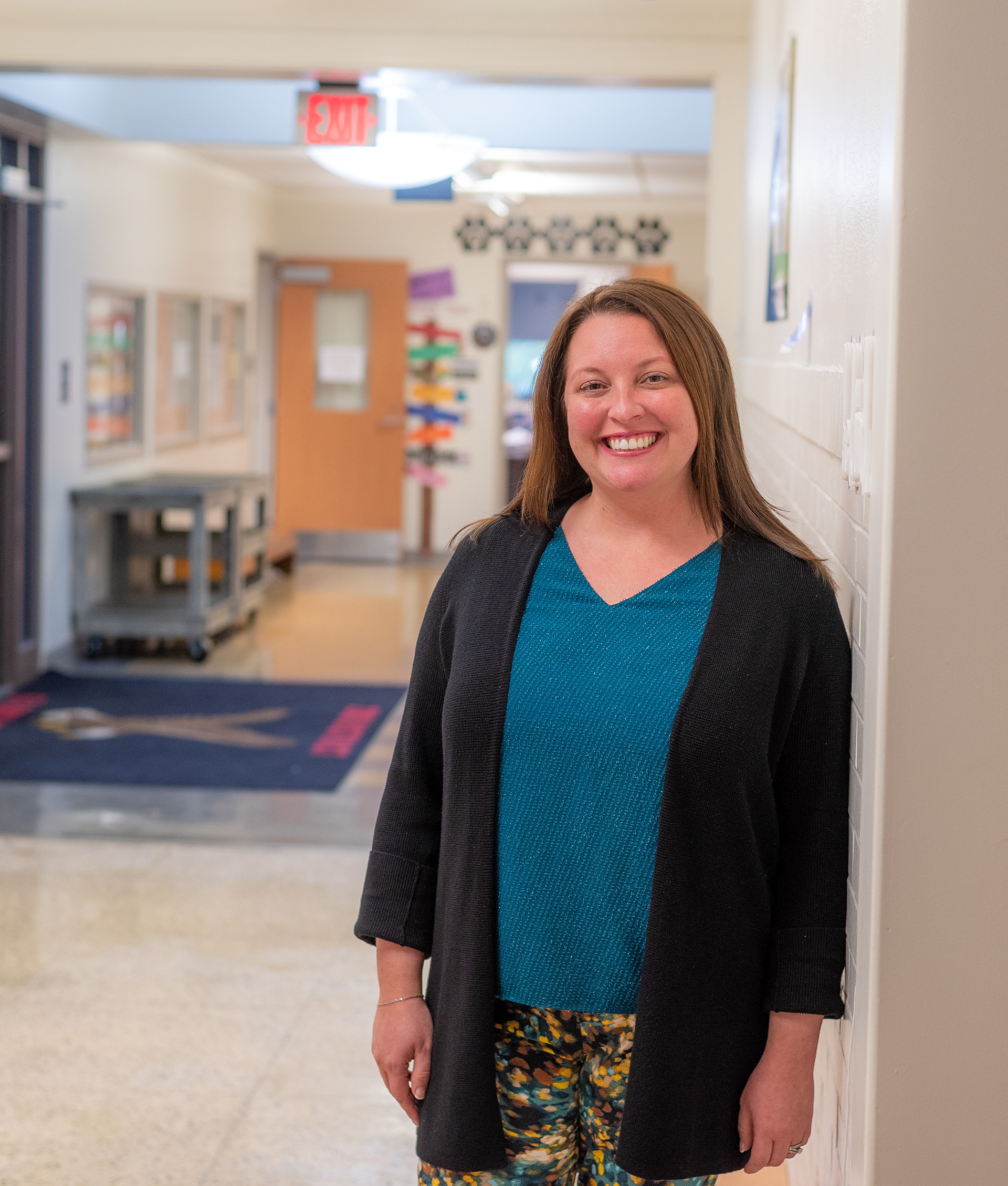
"We're all in this together, the teachers, the staff, the kids, parents, and community."
Now the culture of the school—the vibe in the hallways, the feeling in classrooms and offices, the priorities in disciplinary moments—more fully reflect Kelli’s commitment to making the school a caring, empowering, even joyous place for the students. Her staff are “gems,” she says. “They want to be here.” Teachers are staying at higher rates, too, or returning after “bidding out.” Meanwhile, Kelli knows most students’ names, she pops into every classroom every day, and there is a lot of hugging. One day she counted: 26 hugs by 9 am. And what about concerns around physical contact with minors, a preoccupation in this day and age? She knows the subject backwards and forwards. “But sometimes a hug is what a child needs.” She cites research about what a 20-second hug can do for a young person. “I’d quit my job if someone said I couldn’t hug a child.”
Our conversation often made it obvious that Kelli is also a mom. She and her husband Vince have two teenage boys, Santino and Blaine. Being a wife and mother come first for her, she says. But she happily acknowledges that the roles of Mom and Principal aren’t always that far apart. “It’s all about learning and meeting kids where they are.” Take conflicts between two kids (or two sons). They are often based on perception. Student #1 bumps into student #2 who then pushes #1. Kelli has the two kids re-enact the moment in her office. She asks #2, “did he mean to hurt you? You reacted that way.” They all pause. Then she has them role play what would be a better way to handle that moment. “And by the end they’re laughing.” A better result than just taking away their recess.
In the framework of empathy, even a little moral instruction—that old-time motherly move—can happen. Kelli remembers a little girl in the school who was stealing. “I asked her if she heard a little voice in her head (saying this is wrong).”
“No,” the girl said.
“Did you feel anything in your belly like, oh, it makes me feel bad that I did that?”
“Yes.”
“Well, you always have to listen to that, like a voice that tells you when you’re making a bad choice.”
Of course being Kelli Trenga doesn’t make her job a serene string of triumphs. For one thing, her own high expectations keep satisfaction at bay. “We work really hard here, but we still have work to do.” She completely supports her faculty but makes it clear that every moment in every class should help students learn. No empty time. “I believe in bell-to-bell.” And her own days are too crazy for serenity. On the day of our chat, for example, she met with two boys who had gotten into “an altercation,” then met with both of their moms, “and as I’m meeting with one of the moms, I get called to go out to the pick-up area—there was a school bus problem,” by which time she had to be at a WIN (What I Need) meeting, “a district thing.” This kind of pinballing, what she calls “bouncing,” happens every day. The opening salvo is a 6:30 a.m. email telling her what teachers, if any, are out that day. If one or more are out and there’s no substitute teachers available (often the case), Kelli calls other teachers in the school to see if they would be willing to absorb some of the students in the affected classes. Then she figures out how exactly the affected students will be distributed. (This distributing involves enough variables—for example, which students should and shouldn’t be put in the same class—that Kelli has created a google doc with various distribution scenarios pre-planned.) Then she has breakfast.
Does she worry about burn-out? She’s usually exhausted by the end of the day, but this is a high-energy person. “I perform best when I’m busy.” It helps that she thinks of her work less as a job than as service, what she has been called to do. For the same reason she somehow finds time and energy to volunteer in the community. She’s currently the president of both the local United Way and a softball and baseball organization, and is on the board of Child To Family Connections. Bell to bell.
Hard to know how wide the circle of Kelli Trenga’s serving reaches, how many feel that hug. But what a joy and reassurance, knowing there are people tending to the world this way. It’s a thing worth sitting with—say, with our feet dangling off a school stage—and witnessing.